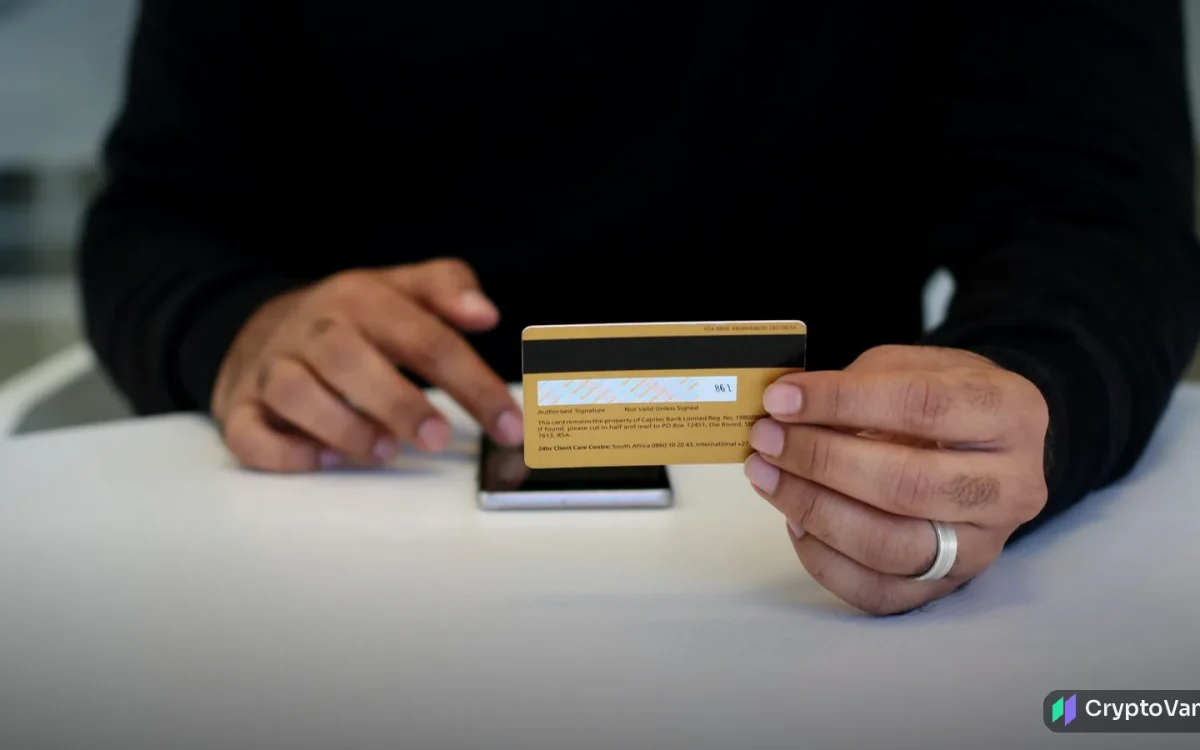
A crypto card is one of the simplest ways to use crypto in daily life. You tap a card at a shop, and coins in your account pay for the coffee. Behind that tap, though, are conversions, fees and sometimes tax events that are worth understanding before you sign up.
Comparing options? See CryptoVank’s crypto cards page.
How a crypto card works
According to >Mastercard’s explainer and >Kraken’s guide, the flow looks like this:
- You hold a balance of crypto or stablecoins with the card issuer, or in a linked wallet.
- You pay with the card, physically or through Apple Pay or Google Pay.
- The issuer converts just enough crypto into local currency at that moment.
- The payment runs over the normal Visa or Mastercard network.
- The merchant receives ordinary money and never touches crypto.
So the merchant doesn’t need to “accept crypto.” The card handles the conversion.
Types of crypto cards
| Type | How it’s funded | Notes |
|---|---|---|
| Debit / spend card | Converts from your crypto balance at checkout | Most common |
| Prepaid card | You top up a fiat balance with crypto in advance | Conversion happens at top-up, not at purchase |
| Credit card with crypto rewards | Normal credit line; rewards paid in crypto | You don’t spend crypto at all |
| Self-custodial card | Spends from a wallet you control, often in stablecoins | Newer; you keep the keys until the moment you pay |
The crypto card fees to check
“No fees” rarely means free. Look for:
- Conversion spread: the gap between the market price and the rate you actually get. This is where many “zero-fee” cards earn their money.
- FX markup when you pay in a foreign currency.
- ATM withdrawal fees and monthly limits.
- Top-up, inactivity or card issuance fees.
- Reward conditions: high cashback rates often require holding or staking the issuer’s own token. If that token falls 30%, your “5% cashback” turns into a loss.
The tax catch
In many countries, spending crypto counts as selling it. Each purchase can create a capital gain or loss equal to the difference between what you originally paid for the coins and their value when you spend them. Kraken’s card FAQ notes the same point for U.S. users.
Two practical consequences:
- Spending volatile coins like bitcoin can create many small taxable events.
- Spending stablecoins usually creates little or no gain, because their value barely changes. That’s one reason many modern cards run on USDC or USDT. Read our stablecoins explainer.
Rules vary by country. Greece’s draft crypto law, for example, would tax disposals at 10% with a €500 annual exemption (our report). For the basics, see our crypto taxes guide.
Safety and custody
Most crypto cards are custodial: the issuer holds your coins. That brings the same risks as keeping funds on an exchange. If the issuer freezes accounts or fails, your balance may be stuck. Practical tips:
- Keep only a spending balance on the card. Keep savings in your own wallet (self-custody guide).
- Turn on app-based spending notifications and card freeze features.
- Check whether the card is available and licensed in your country. Availability differs widely. In Morocco, for example, crypto isn’t yet authorized (our guide).
- Beware of “card” offers that ask you to send crypto first to “activate” them. That’s a common scam (how to spot scams).
Who a crypto card suits
- People who earn or hold stablecoins and want to spend them easily.
- Travelers who want a backup payment method, after checking the FX markup.
- Long-term holders who want crypto rewards without selling, through a crypto-rewards credit card.
It’s a poorer fit if you want to hold bitcoin long term. Spending it can trigger taxes and means selling an asset you meant to keep.
CryptoVank’s take
Crypto cards are a practical bridge between crypto and everyday spending, and stablecoin-based cards are the cleanest version. Judge a card by its total cost: the spread plus fees, minus realistic rewards. Ignore the headline cashback. For side-by-side comparisons, visit our cards page.
Crypto card FAQ
Do shops need to accept crypto for a crypto card to work?
No. The card converts crypto to regular currency, and the shop is paid normally through Visa or Mastercard.
Is using a crypto card taxable?
In many countries, yes. Spending crypto can count as a disposal and create a capital gain or loss.
Are crypto card rewards worth it?
Sometimes. Check whether rewards are paid in a volatile token and whether you must stake or lock tokens to get the top rate.
Is my money safe on a crypto card?
Most cards are custodial, so you rely on the issuer. Keep only what you plan to spend on the card.
Sources
- >Mastercard: What is a crypto card?
- >Kraken Learn: Crypto debit cards, what to know
- >Krak Support: US Krak Card tax information
This article is for information only and is not financial or tax advice. CryptoVank may earn a commission from some card links; see our affiliate disclosure.




1 comment