The Kaia Upbit listing went live on Friday, Oct. 9, and the KAIA token jumped as much as 84% in a single session. Upbit, South Korea’s largest crypto exchange, opened KAIA trading against the Korean won, Bitcoin and USDT at 18:30 Korea time.
Key Takeaways
- Upbit listed KAIA on its KRW, BTC and USDT markets on Oct. 9.
- KAIA rose as much as 84% intraday and traded about 57% higher near $0.058.
- Its market cap reached roughly $375 million, with 24-hour volume above $200 million.
- Kaia is the 2024 merger of Klaytn and Finschia, chains built by Kakao and LINE.
- The network mints 9.6 KAIA per block, or about 300 million tokens a year.
What happened with the Kaia Upbit listing?
Upbit posted its listing notice at about 08:06 UTC and opened trading at 09:30 UTC, according to CoinNess and listing trackers. The token reacted within minutes.
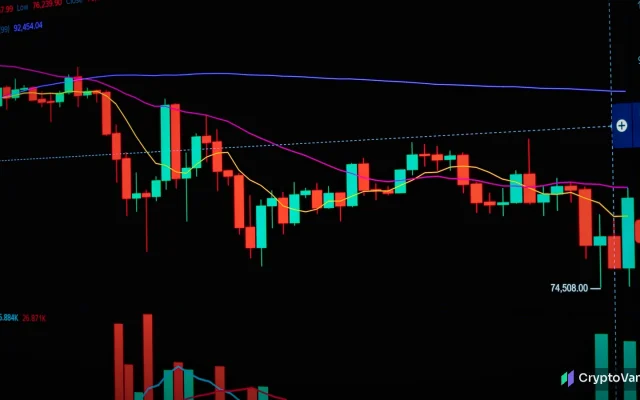
By 11:30 UTC, KAIA traded near $0.0615, up 58.5% on the day, ETHNews reported. Binance volume told the same story. About 359.6 million KAIA changed hands on the Binance USDT pair in under two hours, versus a 20-day average of 43 million.
Later in the day, CoinGecko data showed KAIA near $0.058, up about 57% in 24 hours.
What is Kaia (KAIA)?
Kaia is a layer-1 blockchain focused on Asian users and apps. It launched in 2024 after the merger of two networks:
- Klaytn, built by Korean internet group Kakao.
- Finschia, built by the messaging company LINE.
The old KLAY and FNSA tokens became KAIA. The chain already supports native USDT, and the Kaia Foundation has said it wants to bring a won-based stablecoin to the network.
Why did KLAY never get a won market on Upbit?
Klaytn’s KLAY traded for years on Bithumb, Coinone and Korbit, but never on Upbit’s won board. Many market watchers linked that gap to Kakao’s stake in Dunamu, the company behind Upbit. However, Upbit has never confirmed that reading. Either way, Friday’s listing ends a long wait for Korean holders.
How do KAIA tokenomics work?
This is the part many new buyers skip. According to the Kaia docs, the network mints 9.6 KAIA with every new block.
That works out to roughly 300 million new KAIA per year. The docs describe it as about 5.2% annual inflation, and governance can change the rate. CoinGecko lists about 6.44 billion KAIA in circulation and no fixed maximum supply.
Where do new KAIA tokens go?
Each block reward combines newly minted KAIA with transaction fees. It is then split among validators and stakers, an ecosystem fund and an infrastructure fund. Part of the fees is also burned, which offsets some of the new supply.
For holders, the takeaway is simple. Supply grows every block, so demand has to keep rising for the price to hold. Our guide to crypto staking explains how staking rewards can offset inflation.
Why do Upbit listings move prices so much?
Korean exchanges require a real-name local bank account. As a result, foreign money cannot easily reach won order books. When local demand outruns the tokens on the exchange, the won price rises above the global price. Traders call this gap the “kimchi premium.”
Arbitrage desks then buy the token on global exchanges and send it to Upbit to sell. That buying lifts the price on venues like Binance too. However, the effect often fades once the premium closes.
What are the key KAIA price levels after the Kaia Upbit listing?
Friday’s high of about $0.068 matched the 0.618 Fibonacci retracement of KAIA’s 78% drop from its January high of $0.0969. Sellers stepped in right at that level.
On the upside, a weekly close above $0.068 would open the way toward $0.081 and then $0.097. On the downside, the $0.0575 to $0.0593 zone is the first support. Below that sit $0.050 and the $0.039 to $0.041 breakout zone.
History urges caution. KAIA’s January spike reversed within a week, and a high-volume jump in May also faded. Moreover, the daily RSI near 85 shows the move is extremely stretched.
Bottom line
The Kaia Upbit listing gives KAIA access to South Korea’s deepest won market. Still, listing pumps often cool fast, and the token’s supply keeps growing. Watch the won premium and weekend volume to see whether demand lasts. Before buying any newly listed token, review our tips on how to spot crypto scams.
Disclaimer: This article is for information only and is not financial advice. Newly listed tokens are highly volatile. Always do your own research (DYOR) before investing.