Ether has fallen about 9% over the past week and is trading near $2,480, underperforming bitcoin as U.S. spot ether ETFs recorded their eighth straight session of net outflows. The selling comes during a rough stretch for Ethereum’s wider ecosystem: two layer-2 networks have announced shutdowns in under a week, and a third is openly considering leaving.
What happened
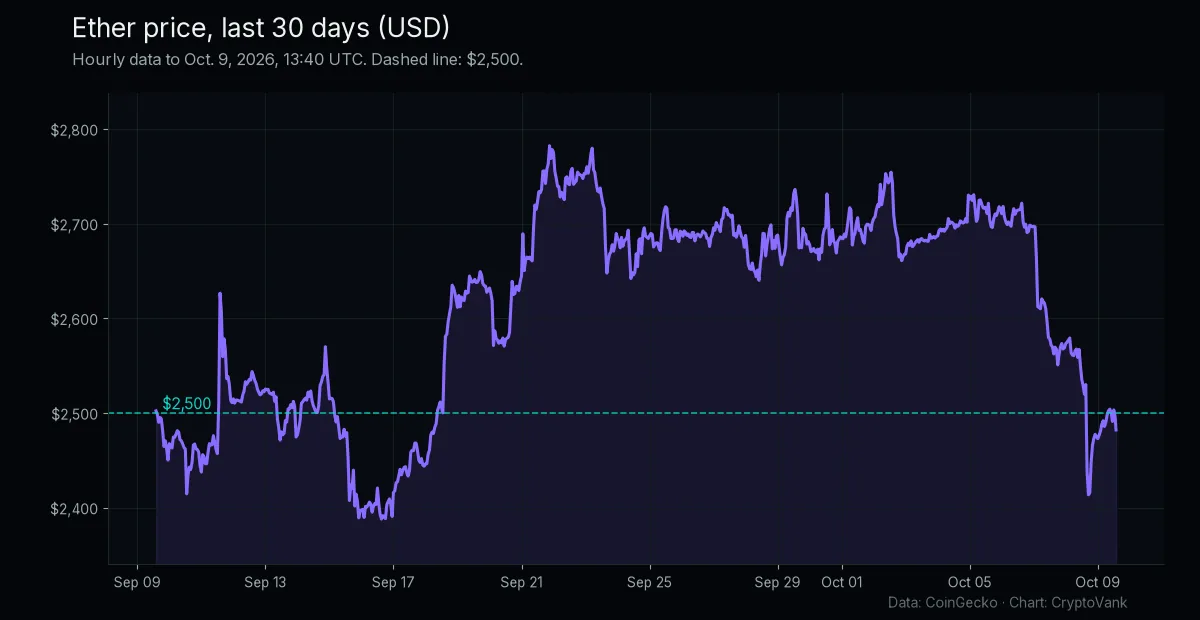
CoinGecko data at 13:40 UTC on Friday put ETH at $2,483, down 1.4% over 24 hours and 9.1% over seven days. On Thursday it dipped to $2,409, close to the bottom of its 30-day range. Bitcoin lost 4% over the same week, so ether fell more than twice as hard.
The ETH/BTC ratio, a quick gauge of how ether is doing against bitcoin, now sits near 0.030. That means one ether buys about 3% of a bitcoin, and the ratio has moved lower all week.
Eight days of ETF outflows
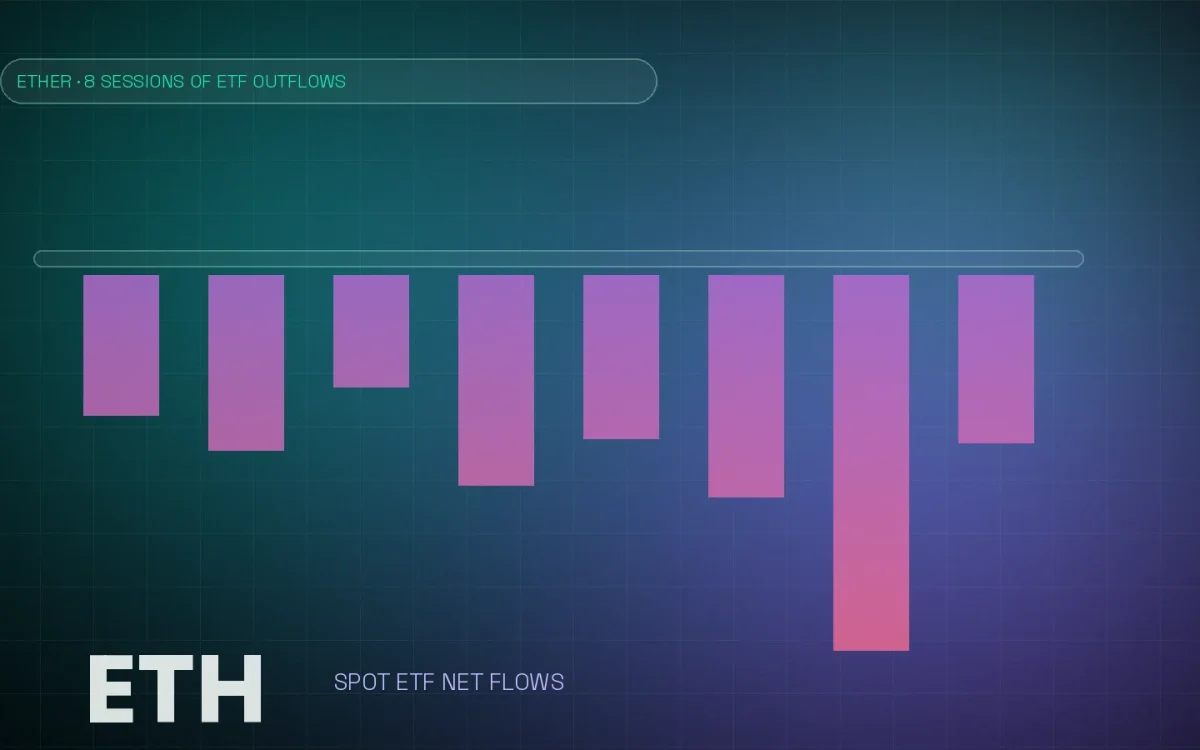
Spot ether ETFs in the U.S. have not had a single day of net inflows since Sept. 29.
- On Wednesday, Oct. 7, they lost $160.9 million, with BlackRock’s ETHA accounting for $116.1 million and Grayscale’s ETHE for $25.8 million, according to Farside Investors data cited by Cointelegraph. That was the seventh straight outflow day.
- On Thursday, Oct. 8, a further $72.5 million left the funds, CoinDesk reported, citing SoSoValue.
Together that brings the streak to about $641 million. For comparison, bitcoin ETFs lost about $729 million over the last two days alone. But bitcoin funds are far bigger, so the ether outflows matter more in relative terms. An unbroken run of selling across eight sessions also points to steady de-risking rather than a single large holder leaving.
Layer-2 networks are closing
The ETF data is only part of the story. The networks built on top of Ethereum are going through a shakeout.
- Blast said on Oct. 2 that it would shut down because its operating costs exceeded its revenue. It once held more than $2 billion in deposits.
- Abstract, the consumer-focused chain run by Pudgy Penguins’ parent company Igloo, said on Oct. 6 that it will stop operating on Dec. 15. CEO Luca Netz said the company had lost “8 figures” funding it. About $76 million in assets was still bridged to the network, according to DefiLlama data cited by CoinDesk, and users need to move funds out before the deadline.
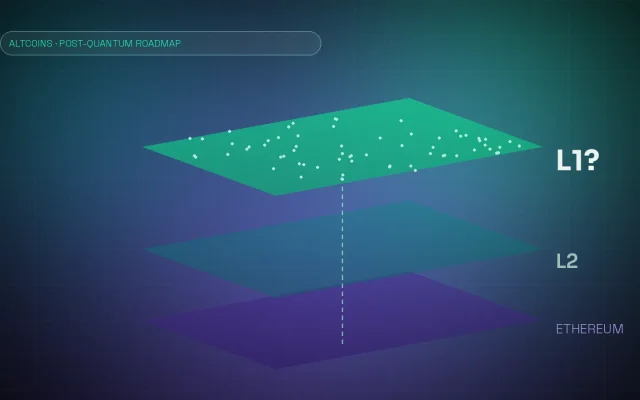
- Starknet said on Thursday that it is “actively considering” becoming a standalone layer-1 so it can reach full quantum resistance by 2027 without waiting for Ethereum. Nothing has been decided, and there is no formal proposal or vote yet.
Abstract’s numbers show the economic problem clearly. DefiLlama data cited by CoinDesk showed roughly $3,900 in chain fees over 24 hours, against about $39,000 in revenue for the apps running on it. Apps can do fine while the chain underneath them loses money.
Why it matters
For years, the bullish case for ether leaned on the idea that a growing family of layer-2 networks would bring more users and more activity back to Ethereum. That case is getting harder to make. When rollups shut down or think about leaving, it suggests too many chains are competing for too few users. It also adds to concerns that Ethereum’s main network captures less value from that activity than holders hoped.
There is a counter-argument. Weak, underused rollups closing could concentrate activity on the stronger ones, which is healthier in the long run. Users on Abstract also have more than two months and an official migration route to move their assets. This is a wind-down, not a collapse.
The other overhang is security research. Ethereum researcher Justin Drake this week urged the industry to prepare a “bunker mode” in case AI-driven maths weakens the elliptic-curve signatures used by Ethereum and Bitcoin wallets. Vitalik Buterin said the risk deserves attention but warned against rushed wallet migrations. The Ethereum Foundation’s target for moving to quantum-resistant cryptography is December 2029. No practical attack has been demonstrated, but the debate added to Thursday’s nervous mood.
What to watch next
- Whether the ETF streak breaks. A single day of inflows would be the first sign that institutional sellers are done.
- $2,400 to $2,500. Ether has spent the past month above $2,388, its 30-day low on CoinGecko. Analysts at BitDelta told CoinDesk they want to see ether back above $2,500 before calling the market stable.
- Layer-2 follow-through. If more rollups announce shutdowns, check bridge deadlines carefully, and only use official migration links.
- Macro data. U.S. September CPI is due on Oct. 14, and high Treasury yields have weighed on all crypto assets this week.
FAQ
Why is the ethereum price falling this week?
Ether is down about 9% in a week because of broad risk-off selling driven by oil and bond yields, eight straight days of spot ETF outflows, and worries about Ethereum’s layer-2 ecosystem and long-term cryptography.
How much have ether ETFs lost?
About $641 million across eight trading sessions since Sept. 29, including $160.9 million on Oct. 7 and $72.5 million on Oct. 8.
What happens to my funds on Abstract?
Abstract says the network will stop operating on Dec. 15. Users should move assets off the chain using its official bridge or migration hub before then. Funds left behind may become inaccessible.
Sources
- Cointelegraph: >US Bitcoin ETFs shed $485M; Ether funds log seventh straight outflow
- CoinDesk: >Live updates: XRP ETFs the only crypto funds with inflows Thursday
- CoinDesk: >Pudgy Penguins’ Abstract becomes second Ethereum layer 2 to shut in a week
- The Block: >Abstract to shut down after losing tens of millions
- Bankless via Yahoo: >Starknet weighs becoming an L1 to chase quantum resistance
- CoinDesk: >Bitcoin and ether holders urged to prepare “bunker mode”
- Price data: >CoinGecko
This article is for information only and is not financial advice. Crypto assets are volatile; do your own research.