
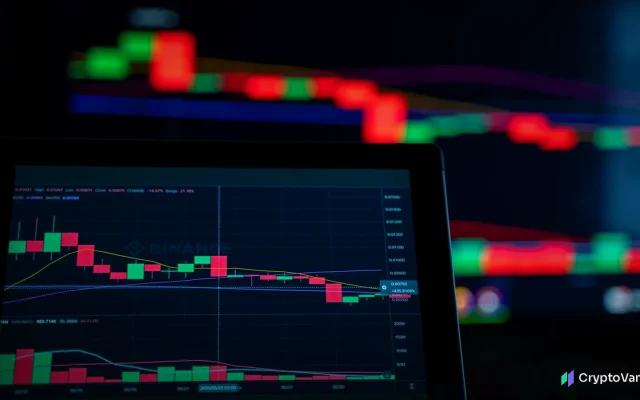
If you want to know where crypto goes next week, watch an oil chart and a bond yield, because oil and crypto are now moving together. That is the uncomfortable message from this week’s selloff. Bitcoin slid toward $80,000 on Thursday, more than $1 billion of leveraged positions were liquidated, and the trigger had nothing to do with blockchains. It came from the Strait of Hormuz, the Gulf of Mexico and the Federal Reserve.
The numbers
On Oct. 8:
- Brent crude rose about 5% to roughly $105 a barrel, according to >AST/RCA’s rate markets update. The causes were escalating attacks on tankers in the Middle East and Hurricane Isaias heading toward Gulf of Mexico oil infrastructure.
- The 10-year Treasury yield hit about 5.305% and the 2-year about 4.82%, according to a >CoinDesk-syndicated report that cites Bitcoin Magazine.
- Fed Governor Christopher Waller said: “if the economic data continue to come in as expected, I anticipate additional hikes to support a timelier return of inflation to our 2% goal.”
- Rate-hike odds: AST put the chance of a December hike at about 70%, while CoinDesk cited futures pricing of about 85% for at least one hike by December. The numbers differ by source and time of day, but the direction is the same.
Bitcoin fell below $81,000 on the day, with an intraday low near $80,800. As of 15:25 UTC on Oct. 9, CoinGecko showed BTC at $82,872 and the total crypto market at $2.80 trillion, down about 3.1% in 24 hours.
How oil reaches your crypto portfolio
The chain runs in four steps:
- Oil up → inflation expectations up. Energy feeds into transport, food and goods prices.
- Inflation expectations up → Fed more hawkish. The Fed already raised rates in September. Officials are now signaling more.
- Hawkish Fed → higher yields. When a 10-year Treasury pays more than 5% with almost no risk, the bar rises for every speculative asset.
- Higher yields → less leverage and less risk appetite. Crypto runs on leverage. When funding gets more expensive and margin calls hit, leveraged longs get liquidated, and that pushes prices down further.
This is why bitcoin has traded more like a high-beta tech stock than like “digital gold” in recent weeks. The ETF outflows are part of the same process: institutions trim crypto at the same time they trim other risk.
Why altcoins fall harder
When macro drives the market, the asset with the most leverage and the least liquidity falls furthest. That explains why ether is down 9.2% on the week, SOL is down 9.8% and XRP is down 9.7%, against 4.1% for bitcoin. Bitcoin’s share of total crypto market value is about 59.3%, which shows money concentrating in the largest asset.
What would help oil and crypto markets calm down
- Lower oil. AST’s analyst put it plainly: the catalyst for lower rates is “lower oil prices and an end to the conflict in the Middle East.” Bitcoin’s rebound on Friday followed President Trump’s statement that the U.S. would not strike Iran before the midterms.
- A soft CPI print. September CPI comes out on Oct. 14. A cooler-than-expected figure could pull December hike odds down quickly.
- A Fed hold on Oct. 28 with less hawkish guidance.
What would hurt
- Brent holding above $105, or a hurricane disrupting Gulf production.
- A hot CPI number that pushes the 10-year yield toward 5.5%.
- Another week of heavy ETF outflows.
CryptoVank’s take
Crypto traders spend a lot of time on on-chain data and token news, but this week the most important chart was outside crypto. Until oil and yields stabilize, rallies are likely to be short and driven by headlines. That doesn’t mean the market can’t go up. It means position sizes and leverage should reflect a market where a single tanker attack can trigger a billion dollars of liquidations.
If you want a simple sentiment gauge to track alongside macro, our guide to the Crypto Fear & Greed Index explains how to read it, and what it misses.
Oil and crypto FAQ
Why does the price of oil affect bitcoin?
Higher oil raises inflation expectations, which makes the Fed more likely to hike rates. Higher rates and yields reduce demand for risky, leveraged assets like crypto.
What was the 10-year Treasury yield this week?
About 5.3% on Oct. 8, 2026, near multi-decade highs.
When is the next Fed meeting?
The FOMC decision is due Oct. 28, 2026. September CPI is released Oct. 14.
Is crypto still correlated with stocks?
In stress periods like this week, yes. Crypto has been moving with other risk assets on macro news.
Sources
- >AST/RCA: Rate Markets Update for 10/8/2026
- >CoinDesk (via Bitcoin Magazine): Bitcoin falls under $83,000 as oil and US borrowing costs climb
- >CryptoSlate: Bitcoin’s slide below $81,000
- >CoinGecko market data, Oct. 9, 2026, 15:25 UTC
This article is for information only and is not financial advice.




5 comments