
Quick answer: The China blockchain network 2030 goal comes from a new informatization plan, published Oct. 23, 2026, that aims to complete a national blockchain network by 2030. It names regional hubs and uses such as trade, taxes and digital identity. It does not approve crypto trading, a token or a digital yuan target, and the mainland ban stays.
The China blockchain network 2030 target is now official. A new five-year plan from Beijing says the country should “basically complete” a national blockchain network by the end of the decade.
The plan gives the project a deadline and regional roles for the first time. However, it says nothing about crypto, and the ban on mainland crypto trading stays in place.
What happened: China sets a 2030 date for its blockchain network
The Central Cyberspace Affairs Commission published the 15th Five-Year Plan for National Informatization on Friday, Oct. 23, 2026. The plan covers 2026 to 2030 and sets goals for networks, data and digital services.
According to Cointelegraph, the plan calls for a national blockchain network that is “basically complete” by 2030. The official PDF lists the network as a key project. It asks officials to speed up the central backbone, connect regional hubs and improve distributed digital identity.
The plan also assigns work to regions. The Yangtze River Delta is meant to focus on trade and finance. Meanwhile, the Chengdu-Chongqing area covers manufacturing and agriculture. ChinaTechNews adds that the Beijing-Tianjin-Hebei region is tied to airport hubs and smart logistics, while the Greater Bay Area handles cross-border data and government services.
Why the China blockchain network matters
To be clear, this is not a new idea. CryptoVank covered the joint guidelines issued on Oct. 9, and the March national plan already mentioned the project. What changes now is the timeline. A firm 2030 date turns a broad goal into a target that officials will be judged on.
Also, the use cases are practical. The PDF points to shipping and freight trade, tax filing, decarbonization and government services. It also pairs blockchain with privacy computing for data trading and asks for stronger national standards.
In other words, Beijing wants blockchain as plumbing for the state and for business data. It does not want open, permissionless networks with tradable tokens. That split has defined China’s policy since 2019, when President Xi Jinping urged the country to invest in blockchain technology.
Data and context: the numbers behind the plan
The blockchain section sits inside a much larger digital push. The plan’s indicator table gives a sense of the scale.
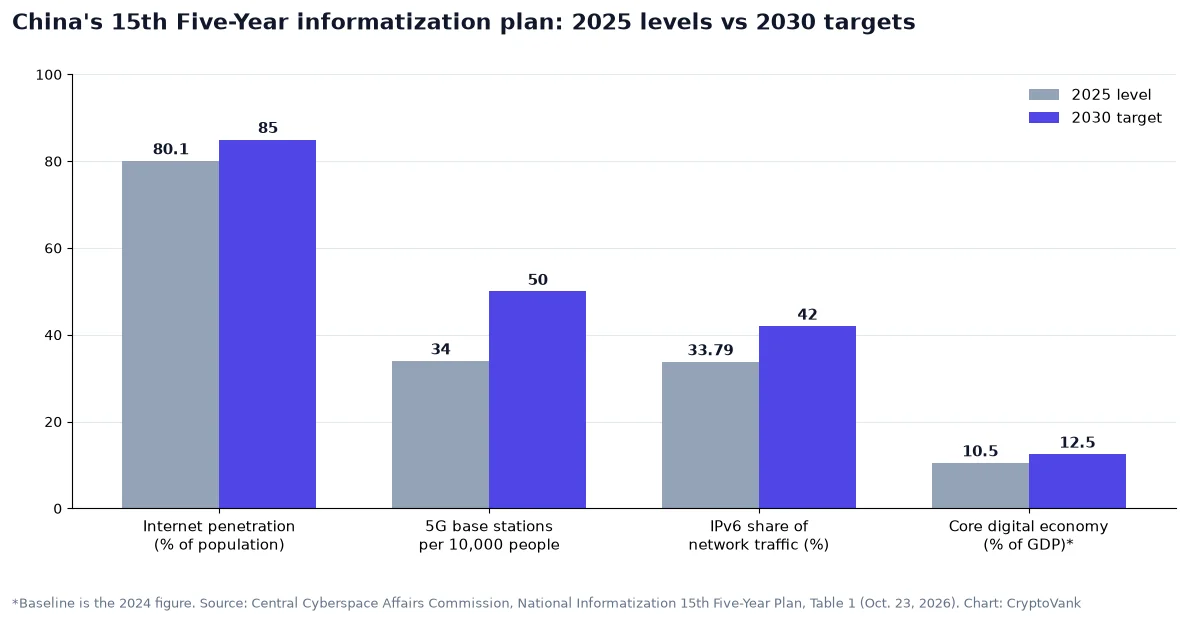
Internet penetration is set to rise from 80.1% in 2025 to 85% by 2030, Xinhua reported. The number of 5G base stations per 10,000 people should climb from 34 to 50. The plan also targets IPv6 traffic rising from 33.79% to 42% of the total. In addition, core digital economy industries should reach 12.5% of GDP, up from 10.5% in 2024.
Notably, the 14-page document gives no separate spending total for the blockchain network. ChinaTechNews also found no native token, no approval for crypto trading and no digital yuan target or timetable.
Meanwhile, the ban itself was restated this year. On Feb. 6, 2026, eight agencies, including the People’s Bank of China and the securities regulator, reaffirmed it, People’s Daily reported. They also barred unapproved yuan-pegged stablecoins issued abroad and warned that tokenizing real-world assets inside China may be illegal.
Even so, global markets barely moved on the news. Bitcoin traded at $80,321 and Ether at $2,327.55 on CoinGecko at 10:51 UTC on Oct. 26. Both were up about 0.2% over 24 hours, as traders looked ahead to this week’s Fed decision.
What to watch next for China’s blockchain plan
First, watch for local plans. Regional governments usually publish their own versions after a national plan, and those will show budgets and named projects.
Second, watch the digital identity piece. A national, chain-based ID system could shape how people log in to public services and how firms share data.
Third, watch Hong Kong. The city remains China’s open door for licensed crypto, with products such as the Pando Solana ETF and bank-backed tokens like HSBC’s RedCoin stablecoin. If Beijing ever softens its stance, the change is likely to show up there first.
For now, the message is clear. China will spend the next five years building blockchain rails it controls, while keeping crypto trading off the mainland.
FAQ
What is the China blockchain network 2030 goal?
China’s informatization plan, published Oct. 23, 2026, aims to basically complete a national blockchain network by 2030. It covers a central backbone, regional hubs and distributed digital identity.
Does the plan lift China’s crypto ban?
No. The plan does not mention crypto trading, tokens or a digital yuan target. Eight agencies reaffirmed the mainland ban on Feb. 6, 2026.
Which regions will lead the network?
The Yangtze River Delta covers trade and finance, and Chengdu-Chongqing covers manufacturing and agriculture. Beijing-Tianjin-Hebei and the Greater Bay Area also have assigned roles.
Sources
- Cyberspace Administration of China: plan announcement (Chinese)
- Cyberspace Administration of China: full plan PDF (Chinese)
- Cointelegraph: China plans national blockchain network buildout by 2030
- Xinhua: China unveils five-year informatization plan
- ChinaTechNews: China sets 2030 target for national blockchain network
- Cointribune: China aims to complete its national blockchain network by 2030
- People’s Daily: Chinese authorities reaffirm crypto ban
- CoinGecko: Bitcoin price
This article is for information only and is not financial advice. Do your own research before you invest.