Quick answer: Grayscale in-kind transfers, announced Oct. 21, 2026, let eligible investors hand over tokens such as BTC, ETH, SOL or XRP and get shares in 10 Grayscale ETFs and trusts without selling for cash first. Approximate minimums run from $80,300 (GSOL) to $364,800 (Bitcoin Mini Trust), per Grayscale.
Crypto holders who want ETF exposure no longer have to sell their coins first, at least at one major issuer. On Oct. 21, 2026, Grayscale said eligible investors can contribute tokens directly in exchange for shares of 10 Grayscale products.
However, the catch is size and access. Minimums start at about $80,300, and every subscription must go through an Authorized Participant, so this is a tool for whales, family offices and advisors rather than retail wallets.
What did Grayscale announce on Oct. 21, 2026?
In a press release issued at 09:00 ET (13:00 UTC), Grayscale said eligible investors can “contribute an underlying digital asset directly in exchange for shares of a Grayscale product, rather than first selling the asset for fiat currency and making a cash investment.”
Meanwhile, Steve Vanourny, the firm’s Head of Index, tied the move to security. “With growing cybersecurity threats, including self-custody and DeFi exploits, institutional custody is increasingly valuable,” he said.
Which Grayscale funds accept in-kind transfers?
Ten products qualify. The firm listed these approximate minimums, based on market prices as of Oct. 20, 2026:
| Product | Ticker | Approx. minimum |
|---|---|---|
| Solana Staking ETF | GSOL | $80,300 |
| Dogecoin Trust ETF | GDOG | $95,550 |
| Chainlink Trust ETF | GLNK | $107,900 |
| Sui Staking ETF | GSUI | $148,400 |
| Ethereum Staking Mini ETF | ETH | $232,300 |
| Avalanche Staking ETF | GAVA | $235,800 |
| XRP Trust ETF | GXRP | $257,000 |
| Hyperliquid Staking ETF | HYPG | $282,600 |
| Zcash ETF | ZCSH | $322,600 |
| Bitcoin Mini Trust ETF | BTC | $364,800 |
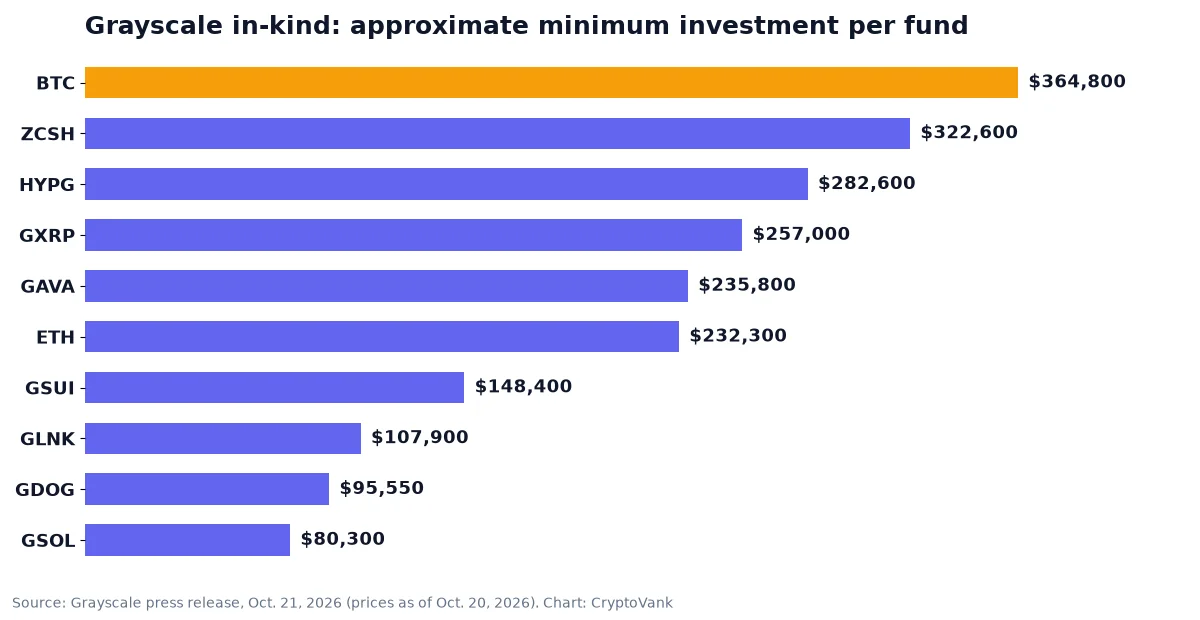
Note that these figures move with token prices and can change without notice.
How do Grayscale in-kind transfers work?
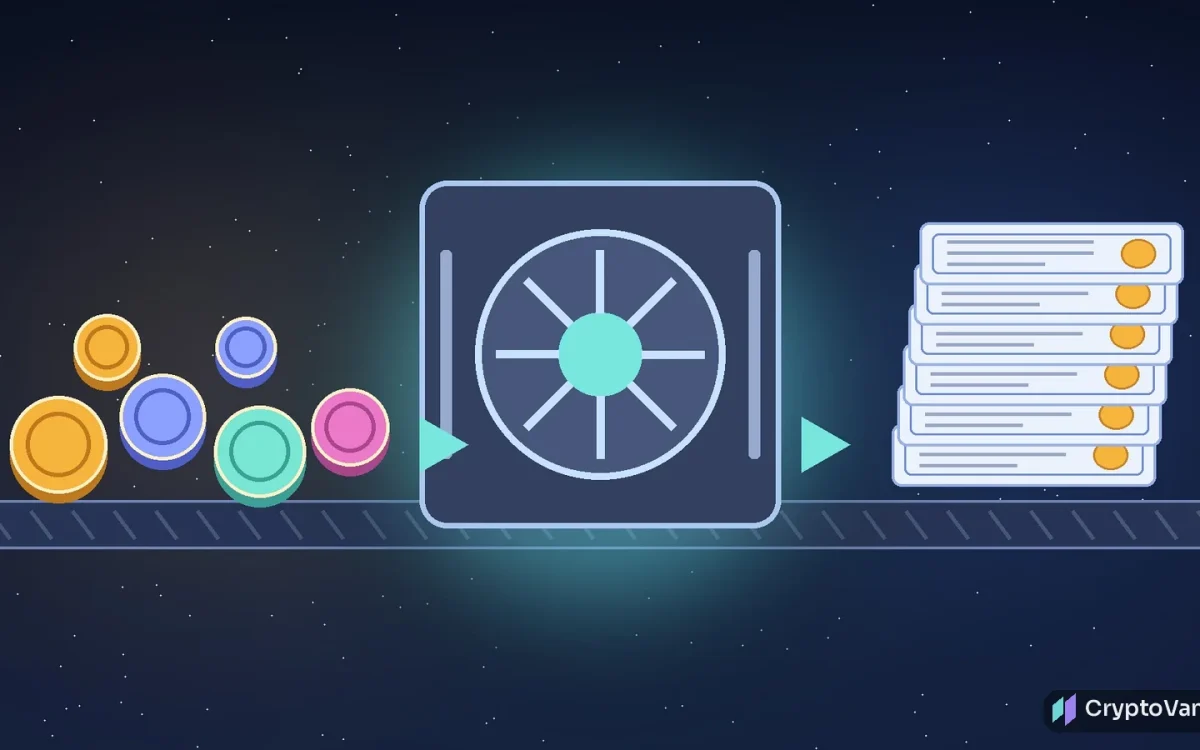
In a normal purchase, you sell your coins on an exchange, wire cash to a broker and buy ETF shares. By contrast, with an in-kind subscription, the tokens themselves go into the fund and new shares come back.
However, you cannot do this from a regular brokerage app. Instead, clients “must work with an Authorized Participant or another conduit to an Authorized Participant,” the firm said, and subscriptions remain subject to “facilitator fees and applicable terms.” Interested investors are told to email inkind@grayscale.com.
For background on how creations and redemptions work, see our guide on how crypto ETFs work.
Why would a holder swap tokens for ETF shares?
The issuer lists several reasons:
- Less custody work. The fund’s third-party custodian holds the coins, so there are no keys to protect.
- Brokerage and retirement accounts. Shares can sit next to stocks and bonds.
- Margin and collateral. Shares may be usable in traditional lending markets.
- Options and estate planning. Listed options can hedge exposure or add income.
In addition, the move builds on a rule change. The US Securities and Exchange Commission approved in-kind creations and redemptions for crypto ETPs in July 2025, according to The Block. That approval covered Authorized Participants, so the firm is now opening a route for other eligible holders.
What are the risks of Grayscale in-kind transfers?
First, the firm’s own disclosures flag several. ETF shares can trade at a premium or discount to net asset value, so the exposure you receive “may not match the value of the contributed assets.” The process also depends on Authorized Participants and custodians, which adds counterparty and transfer risk.
Second, taxes are the big unknown. The issuer says tax treatment “is uncertain and may trigger taxable events,” especially when contributing a token other than the fund’s underlying asset, which may first need to be swapped. Therefore, talk to a tax adviser before moving a large position.
What does it mean for the market?
In the short term, little. In-kind subscriptions swap one form of exposure for another, so they do not create new buying pressure on their own. Bitcoin traded at $84,077 at 23:57 UTC on Oct. 21, up 1.3% in 24 hours, per CoinGecko (see our Bitcoin price page). Among the 10 assets, Zcash led, up 4.3% to $1,311.71.
Over time, though, the option could move large, long-held coins into ETF wrappers. As a result, that could make reported fund flows harder to read, a point worth keeping in mind when tracking daily ETF flows or the recent Ether ETF outflows. For live prices, you can also follow Ethereum, Solana and XRP prices on CryptoVank.
Not financial advice. Do your own research (DYOR) before making any investment decision.
Grayscale In-Kind FAQ
What is a Grayscale in-kind transfer?
It lets an eligible investor give Grayscale a token, such as BTC or SOL, and receive shares of the matching fund instead of selling the token for cash first. Grayscale opened this for 10 products on Oct. 21, 2026.
What is the minimum for Grayscale in-kind investing?
Approximate minimums ranged from $80,300 for the Solana Staking ETF (GSOL) to $364,800 for the Bitcoin Mini Trust ETF, based on Oct. 20, 2026 prices, per Grayscale. The amounts change with token prices.
Can retail investors use in-kind subscriptions?
Not through a normal brokerage app. Grayscale says clients must work with an Authorized Participant or a conduit to one, and facilitator fees apply. The high minimums also put it out of reach for most small holders.
Is swapping crypto for ETF shares taxable?
It may be. Grayscale says tax treatment is uncertain and may trigger taxable events, particularly when contributing assets other than the fund’s underlying crypto. Investors should check with a tax adviser first.